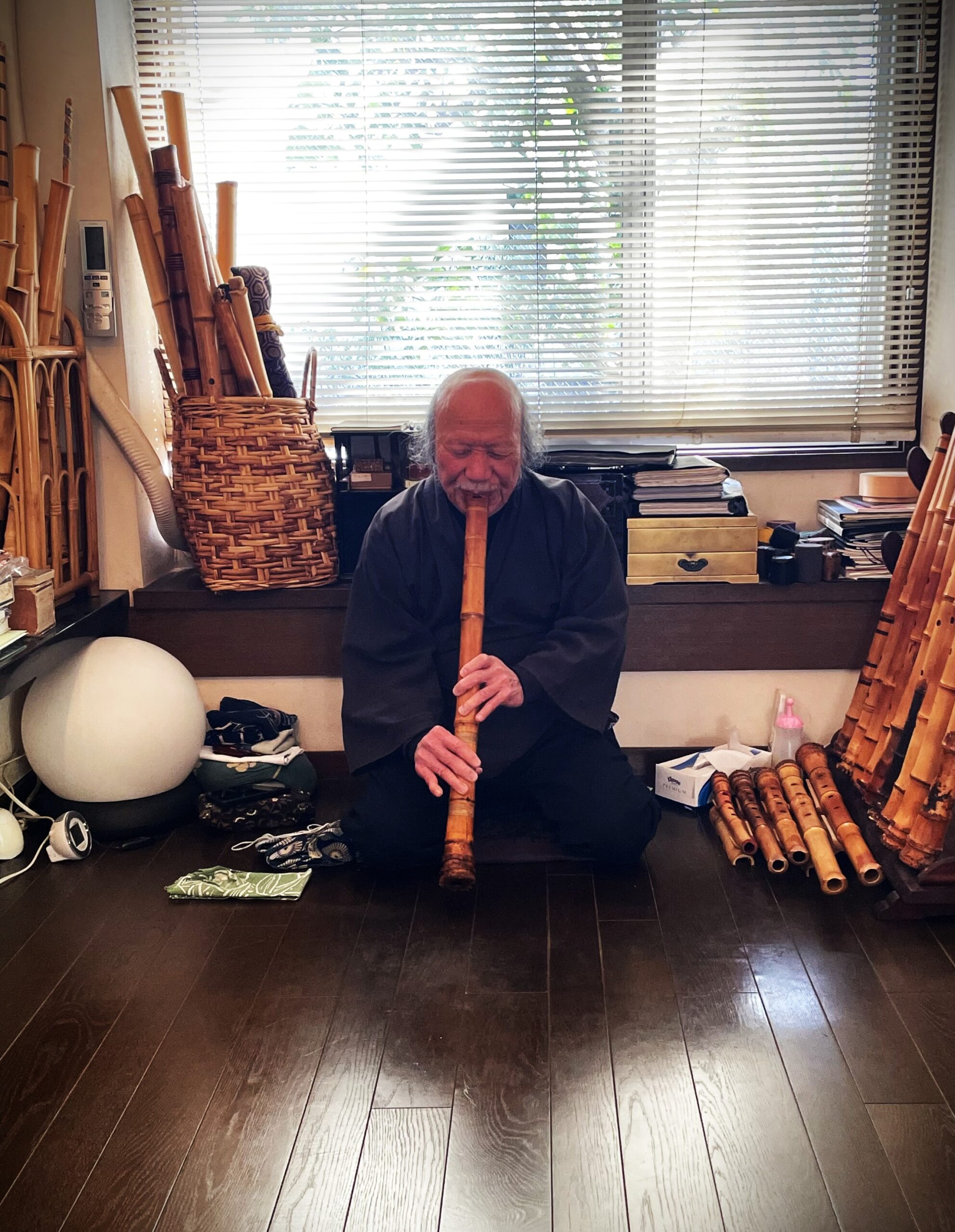
しばらく仕事に忙殺され、約1か月ぶりに禅茶房へ。久しぶりに奥田敦也師の「奥州薩字」と「別伝 鹿の遠音」を生音で聴く。奥田師は常々、尺八古典本曲が表すものは花鳥風月であり自然だとおっしゃられてきた。しかしそれは、山を削り田畑を埋めて造成された住宅地に住む市井の人々が週末に郊外に出でて愛でる飼い慣らされた「自然」ではない。奥田師の地無し尺八が立ち表す世界は、雷鳴がとどろき、飢えた獣が跋扈する自然である。立木が切り裂かれ、燃え、雷雨が吹きすさぶ、荒ぶる神が降り立つ自然である。奥田師の本曲は、人畜無害な癒しと慰みの音楽の領域を超え、此岸から彼岸へと突き抜けていく解脱の虚空を立ち表す。それは地無し尺八にしか表せない、音楽の極北とも云うべき世界である。 虚無僧 流水
Having been swamped with work for a while, I finally returned to the Zensabo after about a month. It was a long time since I’d listened to Master Atsuya Okuda’s “Ohshu-saji” and “Betsuden Shikanotoone” performed live. Master Okuda has always said that what classical shakuhachi honkyoku expresses is the nature. However, this is not the domesticated “nature” that ordinary people living in residential areas built on leveled mountains and filled-in fields admire on weekends.The world that Master Okuda’s jinashi-shakuhachi expresses is a nature where thunder roars and hungry beasts roam. It is a nature where trees are cut down and burn, thunderstorms rage, and fierce gods descend.Master Okuda’s honkyoku transcends the realm of harmless, soothing music, expressing the void of liberation that pierces from this shore to the other shore. It is a world that can be described as the pinnacle of music, something that can only be expressed with the jinashi-shakuhachi. Komuso Ryusui